
APF Yaoundé 2026
Cameroon's Senate Positions Parliamentary Diplomacy as a Pillar of Peace, Multilateralism and Francophone Solidarity
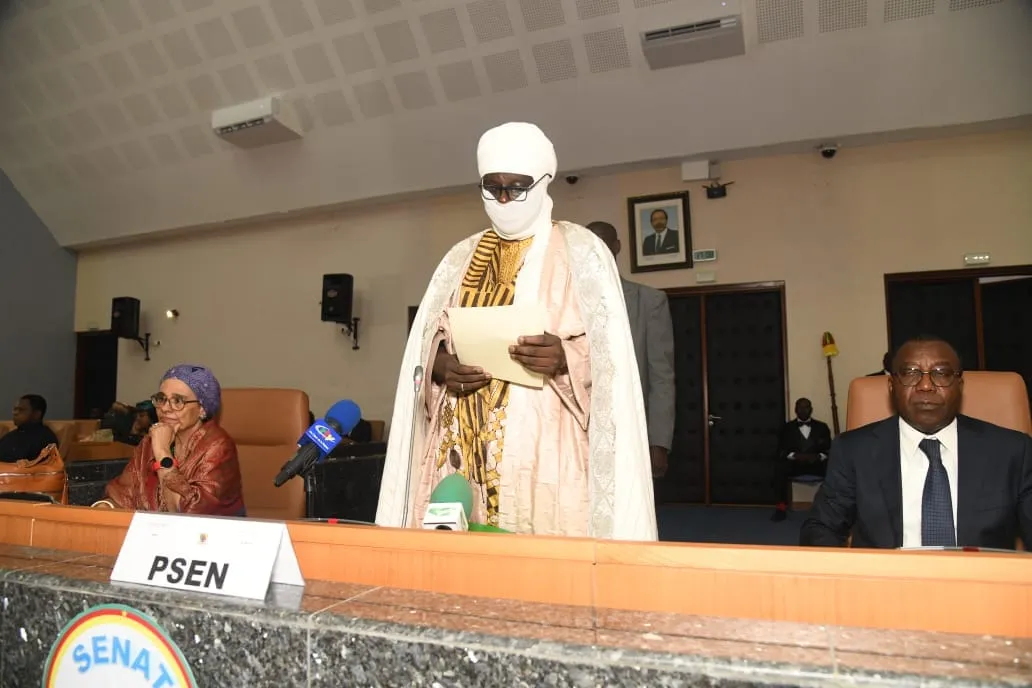
The curtain fell on the 51st Session of the Parliamentary Assembly of La Francophonie (APF) with a statesmanlike address by the President of the Senate of Cameroon, Marcel Niat Njifenji, who used the closing ceremony not merely to conclude a week of parliamentary deliberations but to articulate a compelling vision of the role of Francophone legislatures in an increasingly fragmented global order.
Far beyond protocol, the Senate President's speech underscored Cameroon’s growing diplomatic footprint within the Francophone parliamentary community while reaffirming the country's unwavering attachment to dialogue, multilateral cooperation and collective responsibility in addressing the defining challenges of the 21st century.
Opening his address with warm congratulations to Nathalie Roy on her election as the new President of the Parliamentary Assembly of La Francophonie, the Senate President expressed confidence that the "Yaoundé Resolutions" would become a central pillar of her mandate. His remarks projected continuity in the Assembly's leadership while reinforcing confidence in the institution's capacity to translate parliamentary commitments into concrete action.
The speech equally paid glowing tribute to Hilarion Etong, First Vice-President of Cameroon’s National Assembly and outgoing APF President, whose two-year stewardship was hailed as exemplary. By praising his commitment to dialogue, consensus-building and parliamentary cooperation, the Senate President portrayed Cameroon not only as host of the Assembly but also as a nation capable of providing respected leadership within the Francophone world.
A significant political message emerged through the Senate President's repeated acknowledgement of President Paul Biya's role in the successful organisation of the session. By describing the Head of State as the "principal architect" of the event's success, the address framed the hosting of the APF as part of Cameroon’s broader diplomatic strategy aimed at strengthening its international visibility and influence through parliamentary engagement.
At the heart of the address was a thoughtful reflection on the two major themes debated during the Yaoundé session: multilateralism and State sovereignty, and climate change and the responsibility of Francophone parliaments.
The Senate President painted a sobering picture of an international system challenged by armed conflicts, widening inequalities, poverty and repeated attacks on the principles of multilateral cooperation that have traditionally underpinned global peace and security. In doing so, he elevated the discussions beyond parliamentary procedure, placing legislators at the centre of contemporary geopolitical debates.
On climate governance, his remarks echoed the frustrations of many developing nations regarding the slow implementation of international climate solidarity. While acknowledging the succession of global climate conferences, he stressed that tangible support for countries of the Global South remains insufficient, calling for stronger international commitment to equitable climate action.
Perhaps the most memorable section of the address was his appeal for the APF to become an enduring defender of peace and multilateralism. Borrowing President Paul Biya's now familiar description of Cameroonians as "beggars for peace," the Senate President urged Francophone parliamentarians to champion dialogue over confrontation and cooperation over division.
The message reflected an understanding that parliamentary diplomacy is increasingly becoming an indispensable complement to traditional state diplomacy, particularly at a time when international institutions face unprecedented pressure.
Beyond global issues, the speech highlighted the institutional vitality of the APF itself. Satisfaction was expressed over the successful completion of the Executive Bureau meetings, consultations of parliamentary Secretaries General, the 11th Session of the Young Francophone Parliament and the activities of the Network of Women Parliamentarians. By insisting on effective implementation of the Yaoundé resolutions, the Senate President signalled that the Assembly's work should be measured not only by declarations but by practical outcomes.
The closing address also offered a subtle but important reflection on Cameroon’s own parliamentary evolution. While recognising the National Assembly as the country's oldest legislative institution, the Senate President recalled that the Senate, established in 2013, has rapidly integrated itself into international parliamentary diplomacy. His appeal for greater institutional support from the APF illustrated both the ambitions and developmental aspirations of Cameroon’s Upper House as it seeks to consolidate its place within global parliamentary networks.
Ultimately, the closing ceremony transformed into more than a formal conclusion of proceedings. It became a diplomatic statement affirming that Cameroon intends to remain an active advocate of peace, multilateralism and parliamentary cooperation within the Francophone space.
As delegates departed Yaoundé, the Senate President left them with a message that resonated beyond the walls of the Paul Biya Glass Palace: in an era marked by geopolitical uncertainty, climate vulnerability and growing international divisions, parliamentary diplomacy remains an indispensable instrument for building consensus, defending democratic values and preserving peace.
The challenge now shifts from adopting resolutions to implementing the Yaoundé Agenda, whose success will ultimately determine whether the 51st Session of the Parliamentary Assembly of La Francophonie becomes a historic turning point or simply another chapter in the Assembly's institutional history.
Comments(0)
Loading comments…