
Hon. Njume Peter Champions Peace, Culture and Education in Ekondo Titi.
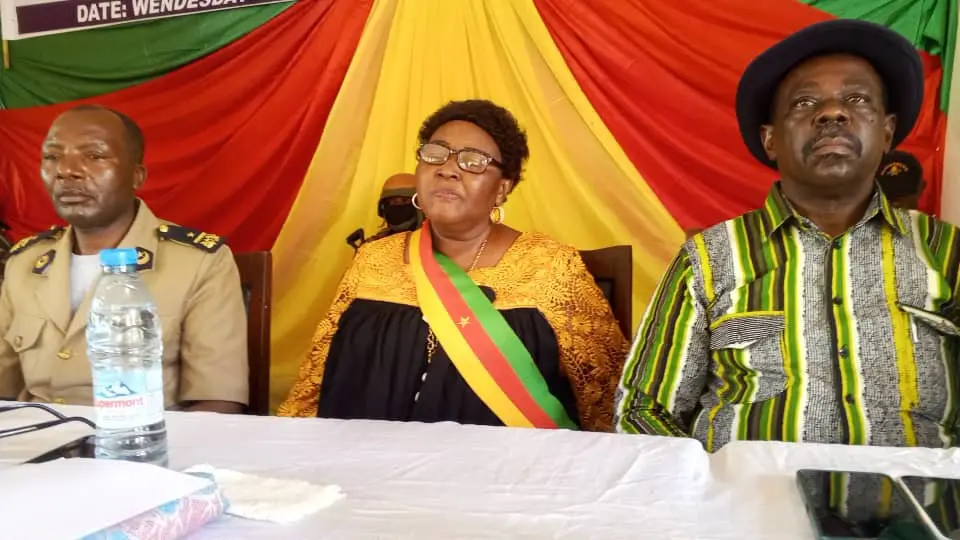
Hon. Njume Peter Ambang, Member of Parliament for Ekondo Titi and Dikome Balue in Ndian Division, has announced a series of community-based initiatives aimed at restoring peace, reviving education and strengthening traditional institutions in response to the community dialogue initiative launched by the Prime Minister, Head of Government, Chief Dr Joseph Dion Ngute, to facilitate a return to normalcy in Cameroon’s two English-speaking regions.
The parliamentarian made the commitments during the Ekondo Titi Sub-Divisional Inter-Community Dialogue, which brought together administrative authorities, traditional rulers and community representatives to discuss practical measures towards lasting peace and the restoration of normal life in communities affected by the prolonged Anglophone crisis.
In response to the Prime Minister’s call for community engagement in the peace process, Hon. Njume Peter proposed financial and logistical support to traditional chiefs to organise dialogue sessions in their respective villages. The initiative is intended to encourage grassroots reconciliation, rebuild confidence among community members and strengthen the role of traditional authorities in resolving local disputes.
The MP equally expressed his readiness to support villages in organising cultural festivals as a means of promoting unity, preserving cultural identity and reconnecting communities separated by years of insecurity. He considers cultural activities an important avenue for bringing people together, restoring social relationships and encouraging displaced residents to participate in community life.
Education also featured prominently in the parliamentarian’s commitments, as he pledged support for primary schools willing to resume classes in affected communities. His proposal seeks to encourage the reopening of educational institutions and help children regain access to learning after years of disruption.
The dialogue equally provided an opportunity for the Divisional Officer of Ekondo Titi to address concerns surrounding traditional leadership and the authority of village chiefs. In a strongly worded intervention, the administrator warned some village regents against taking decisions without consulting their legitimate traditional rulers or obstructing their return to their communities.
“Your villages are controlled by chiefs. Some of you are terrorists; you don’t want your chiefs to come back to the village. We know the games you people are playing,” the Divisional Officer declared. He further cautioned that regents should not assume the authority of substantive chiefs, insisting: “Let me warn you, regents are not chiefs. I will never address any letter to you but to the chiefs.”
On the question of effective schooling in Ndian Division, the South West Regional Delegate of Basic Education, Rose Bume, expressed concern over the low number of operational primary schools. She appealed directly to armed separatist fighters, commonly referred to as Amba fighters, to allow children to return to classrooms and pursue their education without interference.
The Regional Delegate also called for commercial motorcycle riders to carry identification numbers, raising the issue of identification and accountability as communities work towards restoring normal activities.
The discussions reflected the wider objectives of the community dialogue initiative championed by Prime Minister Chief Dr Joseph Dion Ngute, which seeks to involve local communities, traditional authorities and other stakeholders in efforts to restore peace and normalcy across the North West and South West Regions.
For Hon. Njume Peter, the response to this initiative goes beyond participation in dialogue meetings. His proposed interventions seek to translate the peace process into practical action at village level, where traditional leadership, cultural activities and functioning schools remain essential to community recovery.
In Ekondo Titi, where insecurity has disrupted education, displaced families and affected traditional institutions, the success of these commitments will depend on cooperation among administrative authorities, traditional rulers, community leaders and residents.
As the government’s community dialogue initiative progresses, Hon. Njume Peter’s proposed support for village consultations, cultural festivals and school reopening provides a local framework through which communities can contribute to reconciliation and the gradual restoration of normal life in Ndian Division.
Comments(0)
Loading comments…